



North Korea: A Korean Christian's Perspective
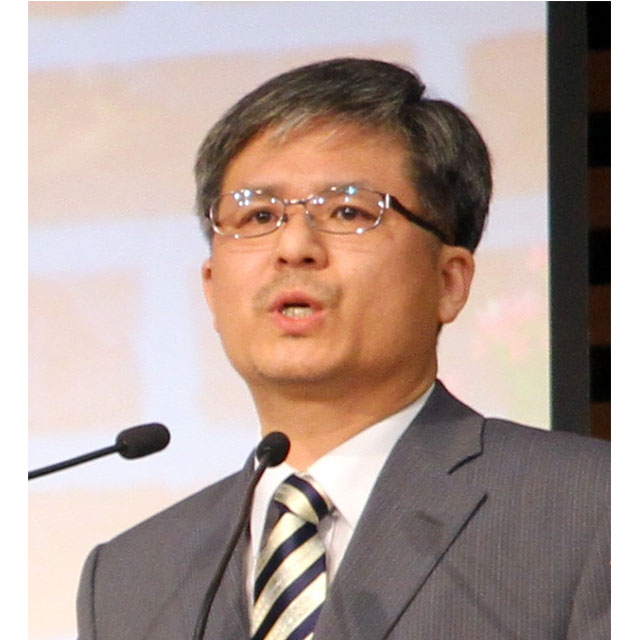

Preface: This blogpost was originally written in Korean by Boaz Seong who serves as the National Director of TWR Korea. Boaz translated this essay into English and TWR writers assisted to clarify some wordings for English readers. Boaz emphasizes that these reflections are his own and not intended to represent the views of TWR International.
From world war to civil war-
They called it V-J Day or “Victory Over Japan Day.” August 15, 1945 was the day World War II ended, with Japan accepting defeat after nuclear bombs were dropped on Hiroshima.
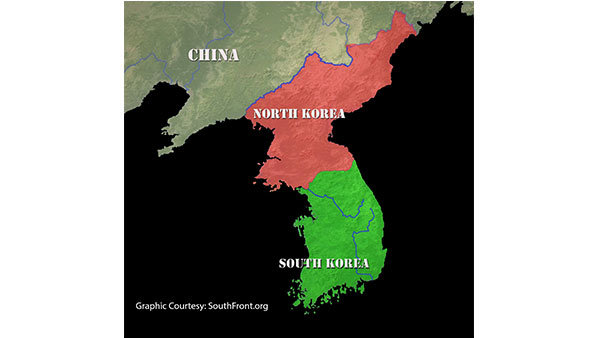
It was a happy day for the Republic of Korea to celebrate its independence from Japanese colonial rule. But it was also the day when the Republic of Korea was divided into two countries, North and South.
In 1948, Kim Il-sung took control of North Korea, a new nation recognized in the international arena. He authorized the invasion of South Korea, and by 1950, the Korean Peninsula descended into a tragic fratricidal war. Korean brothers and sisters were killing each other.
To this day, despite being in an “official” state of truce, the war rages on between the North and the South.
Enter the nuclear weapons-
Also to this day, the peace in the Korean Peninsula remains linked to nuclear weapons. That is because, during his reign of forty-six years, Kim Il-sung adopted the possession of nuclear weapons as his main strategy. Before his death in 1994, Kim Il-sung's dying instruction was for his nuclear strategy to remain in place.
Kim Il-sung's nuclear obsession was passed down to his son Kim Jong-il, who then passed it down to his son, the current dictator, Kim Jong-un.
For decades, the international community has tried to confirm that North Korea actually possesses nuclear weapons. World governments have used powerful sanctions and conciliatory strategies in repeated attempts to denuclearize the Korean Peninsula. But these measures have only produced short-term successes, while North Korea has pressed on to achieve its nuclear ambitions.
North Korea has never abandoned its development and possession of nuclear weapons, and it has no intentions of doing so today.
This brings us to present day.
During the events of 2017, North Korea has declared missile launching provocations against the United States, along with targeted attacks on the U.S. territory of Guam, where TWR has a major radio broadcasting transmitter that is supported by a team of TWR missionaries living on the island.
South Korea at the ready-
Although repeated threats and missile tests from Kim Jong-un have alarmed people throughout the world, the South Korean people -- who are in immediate proximity to the North -- are as tranquil as ever.
With this so-called tranquility, some may worry that South Koreans have become too complacent, even jaded. Seventy years of countless provocations from the North can have that effect.
There is a reason South Koreans are not in a state of panic. All South Korean males are required to complete at least two years of tax-free military service. They are trained in the strategies and tactics of modern warfare. Then after active service, they remain on stand-by in the reserve forces, always prepared for war.
If fighting breaks out, seventy-four percent of South Korean males have said they are willing to go to war. North Korea knows this fact well. And though Kim Jong-un will not admit it, the North Korean people have little desire to engage in a full-scale war with the South.
Three perspectives on dealing with North Korea-
Despite South Korea’s preparedness, Kim Jong-un's behaviors have caused concerns that a war could be triggered by accident. This uncertainty has led to various perspectives on how to stop the threats coming from North Korea.
One perspective insists North Korea should be defeated because it is evil. This position claims North Korea should be destroyed out of existence using preemptive strikes. Past experiences have influenced this perspective, because a deadly Korean War would be triggered by a sudden invasion by North Korea. Those who experienced the Korean Conflict in the 1950s have many worries about this. They do not want to repeat the horrors of war among Korean people.
A second perspective believes North Korea does not truly desire a war. This is based, in part, on a view that provocations by North Korea have been about asserting its territorial authority over the surrounding sky and seas, especially around South Korea.
Another reason for this second perspective is that North Korea suffered greatly for the Yeonpyeong Island bombing that provoked South Korea into retaliation. The damage to North Korea was significant.
To avoid more devastation, North Korea has resorted to other means to win the upper hand in negotiations.
Recently, North Korea released a Korean-Canadian pastor, Lim Hyun-soo, who had been detained for thirty-one months. North Korea cited his illness as the reason. This represented an ongoing pattern of “good cop-bad cop” routines that has become North Korea’s strategy of manipulation -- to avoid war while keeping the upper hand.
A third perspective involves the United States, which says it has no intention to start a war. Precision strikes on North Korea's Nuclear Development Facility is the prevailing U.S. position. The U.S. knows a war in the Korean Peninsula could lead to a global Third World War that would automatically involve neighboring nations, including China.
Some nations do not want a resolution-
For those unfamiliar with the region, it is important to understand that some neighboring countries in the Korean Peninsula do not support the unification of South and North Korea. While they do not want a war to happen, nations such as China are fine with keeping things tense. Maintaining the "status quo" means that the only remaining divided nation in the world can persist as a useful tool for global politics. This makes it extremely difficult to construct peace in the Korean Peninsula and unify the two Koreas, both politically and militarily.
South Korea also has nuclear weapons-
As for nuclear weapons, this issue has been part of the Korean Conflict since the country was first divided.
Ironically for South Korea, nuclear weapons have been needed to maintain peace in the region. Weapons of mass destruction have been providing "mass love and compassion" for the South Korean people in the form of deterrence and protection.
The plight of Korean Christians-
For Christians reading this, you may not know that Korean Christians are also divided. They split into two main groups based on their political positions. Korean Christians participate in regular prayer meetings about peace in the Korean Peninsula, but their prayer topics in the two groups are different.
Never-ending war in the Korean Peninsula has left the Korean people deeply wounded with little hope those wounds can heal.
This personal and painful history of Korean brothers and sisters killing each other is not going to be solved through international politics. And it will not be solved if one side overtakes the other with force. Both sides are still pointing the gun at each other and that is not going to change any time soon.
Peace in the Korean Peninsula is possible only with the unconditional love of Jesus Christ. The love of God must be communicated to North Korea.
Years ago, a respected Christian in South Korea, Pastor Son Yang Won, forgave a young man who murdered his two sons. With the love of Christ, Pastor Son adopted the young man as his own son. People called Pastor Son an “atomic bomb of love.”
TWR transmitting hope-
Today, at least twelve stations -- including TWR Korea -- are sending Korean broadcasts into North Korea. While TWR Korea is broadcasting messages of hope, some stations are broadcasting support for an internal revolution among the North Korean population.
As the director of TWR Korea, I do not have clear answers to resolve this situation. Only God knows the future. But I can tell you that no matter how high tensions rise, TWR Korea will continue to spread the love of God to North Korea, just as it has for twenty-two years.
My prayer is that the TWR Korea broadcasts from Guam to North Korea will become the “atomic bomb of love” for Christ.
Email the Author (Boaz is his English name)
Listen to Boaz in this Footsteps audio series
TWR Korea (website in South Korea)