



Christian Thinkers 101: A Crash Course on Søren Kierkegaard

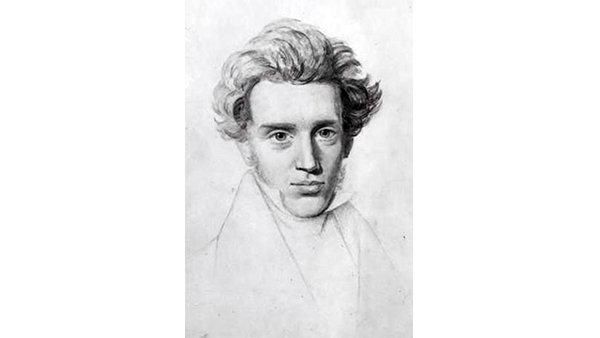

Søren Kierkegaard was unknown to the world until 100 years after his death. Though his philosophical and theological works finally rose in popularity in the twentieth century, what exactly did he believe and what else did he contribute to Christianity? Here’s your crash course on the life and accomplishments of Søren Kierkegaard—and why he still matters today.
Who Was Søren Kierkegaard?
Søren Kierkegaard (1813–1855) was born in Copenhagen, Denmark, and was the youngest of seven children. Known as the melancholy Dane for his life of angst and tragedy, he experienced a dramatic conversion to Christianity in his college years that would shape the rest of his life. Nevertheless, being subsequently dissatisfied in love, career, health, and church life, he met an early demise. He died a lonely and frustrated man in obscurity in the middle of the nineteenth century with his many self-published writings virtually unknown. Yet, 100 years later, he would become the most popular philosopher in the entire Western world. His writings became famous and he was designated the “father of existentialism.” The philosophy of existentialism emphasizes individual existence and freedom. It insists that humans must define their own meaning through concrete choices in life. In fact, existentialism became so widespread that a number of leading religious and secular philosophers embraced different variations of it in the twentieth century. Catholic philosopher Gabriel Marcel was a noted religious existentialist, whereas probably the most influential atheistic existential philosopher of the twentieth century was Jean-Paul Sartre.
What Did Søren Kierkegaard Write?
Among many works, perhaps Kierkegaard’s two most important philosophical and theological books are The Sickness unto Death and Philosophical Fragments. In the first, he provides a penetrating analysis of the human condition of despair brought on by sin and being alienated from God. Kierkegaard’s cure for this soul sickness is being reconciled to God through God’s grace and mercy found in Jesus Christ. In the second work he attempts to present the Christian faith as it was originally intended. He focuses upon Christ’s incarnation as the great paradox—God in the flesh, God in time, the infinite uncovered in the finite.

What Did Søren Kierkegaard Believe?
Christians of various traditions continue to defend several of Kierkegaard's beliefs. The following are perhaps Kierkegaard’s three most important ideas or arguments for the God of Christianity:
- Kierkegaard focused not upon the universal principle but rather upon the particulars of life. Each individual, in contrast to the crowd, must make their own decisions and must stand responsible and accountable to God.
- Kierkegaard believed in objective truth, but he scorned the idea that truth is purely objective and can be attained merely through rational inquiry. Rather, he believed that truth must be personally and individually embraced (my truth, true for me). This is not subjectivism but rather the personal application of objective truth to one’s life. He advocated that a person must find truth for which he or she is willing to live and die (the Triune God, the Christian faith).
- For Kierkegaard, to achieve proper self-actualization, human beings encounter the “three stages on life’s way”: aesthetic (where one is ruled by pleasure), ethical (where one is ruled by moral obligations), and religious (where one is ruled by faith in God). These stages can be understood in a dialectic fashion (standing in tension or in conflict with one another).
Why Does Søren Kierkegaard Matter Today?
Søren Kierkegaard is criticized for his extreme statements, such as “truth is subjective” and “faith is absurd.” Yet if these statements are understood as reactions or correctives to impersonal objectivity and purely intellectualized beliefs (where ideas are solely abstract with no personal application), then he is far less alarming. Kierkegaard needs to be understood as reacting to philosophy that he perceived to be excessively abstract without appropriate personal application and commitment (like philosopher Georg Hegel’s idealism).
Søren Kierkegaard was unique as a Christian thinker. When evangelicals state that faith is deeper than mere intellectual assent and that trust in God involves the commitment of the whole person, they are touching on theological issues that were critically important to Kierkegaard. Though his life exhibited dysfunction and anxiety, he made extraordinary contributions as a Danish philosopher, theologian, psychologist, poet, social critic, and Christian writer.
Other articles in the Christian Thinkers 101 series: St. Augustine; C. S. Lewis; Blaise Pascal; St. Anselm; St. Athanasius; St. Thomas Aquinas; Jonathan Edwards
Reflections: Your Turn
It seems there are plenty of examples of Christians today overemphasizing their subjective spiritual experience; but is it possible to be overtly objective about one’s faith to the point where it becomes a problem? In other words, is it a problem when one’s faith is merely a bunch of ideas divorced from passionate commitment? Visit Reflections on WordPress to comment with your response.
Resources
- For an exploration of Søren Kierkegaard’s life as well as his philosophical and theological thought, see Søren Kierkegaard’s Christian Psychology by C. Stephen Evans.
- See also Kierkegaard for Beginners by David Palmer
Subjects: People of Faith
Check out more from Reasons to Believe @ Reasons.org