



How a Christian Worldview Influenced America’s Founding Fathers

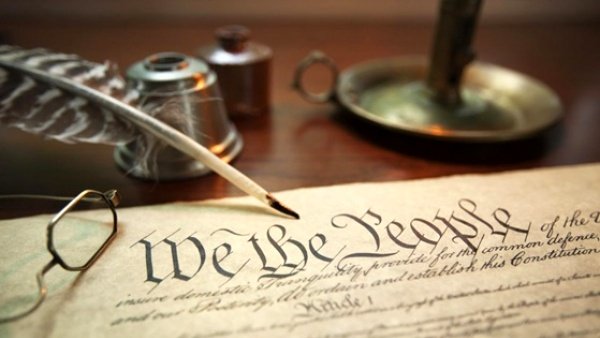

It might be fair to say that most Americans tend to take our freedom for granted. We forget that our freedom was hard-won and is not guaranteed. In fact, the liberties we cherish are privileges not many societies enjoy. Tyranny, in its many guises, is the historical norm. In truth, we do have an extraordinary amount of freedom in the United States, and there are profound reasons for that stemming directly from our Christian heritage.
As the founding fathers set up a new government, they started from what scholars consider a Reformed Christian worldview. Of the 54 signers of the Declaration, 29 were ordained ministers, and most of the others were deeply religious men. The idea that the majority of the founders were deist is an exaggeration passed on over time, as only a handful might be claimed as such, and even this is difficult to verify by our understanding of the term.
The founding fathers’ Christian worldview was “the single greatest influence on the content and interpretation of America’s foremost founding documents: The Declaration of Independence (1776), the Constitution (1787), and the Bill of Rights (1789).”1
The biblical worldview can be summed up in three words: creation, fall, redemption. These three words birthed the equality of all humanity before God (creation), human nature as evil (fall), and the inherent value of the individual (redemption). These ideas lay at the root of the formation of modern democracy everywhere, most especially in America.
1. Equality of All Humanity before God
The Christian notion of equality says that people are equal because (1) God made humanity in His image; and (2) He loved us enough to have sacrificed His Son for each of us. Rather than being based on abilities, appearance (race, ethnicity, sex), achievements, or social position, a person’s worth is inherent. We are equal simply because God values us equally. Human worth is God dependent and God ordained; human assessment is irrelevant. The founding fathers recognized this view of humanity in the Declaration of Independence’s famous opening statements:
We hold these truths to be self-evident, that all men are created equal, that they are endowed by their Creator with certain unalienable Rights.
The Christian view of equality runs counter to common human impulses and is unique to the Christian West. In most of the world’s cultures, social hierarchy is more or less rigidly prescribed and the rules of social engagement are correspondingly tight.
2. Human Nature as Evil
People often falsely equate being kind and considerate with being good. In the Christian worldview, however, God holds His creation to a far higher standard of goodness based on His law. Because of our fallen nature, humans fail to reach this standard.
This idea is also unique to the Christian worldview. Most worldviews see human nature as good, or at least not evil. The Confucian worldview, for example, and most modern secular humanistic worldviews, see humanity as inherently good.2
The founders’ Christian worldview, buttressed by their experiences, left them with a profound distrust of human nature.3 They believed that man could not be trusted with absolute power over their fellow men. By creating a separation of powers and a system of checks and balances—both of which were written into the Constitution4—the founders made it difficult for any individual or branch of government to gain too much control over human affairs.
3. The Inherent Value of the Individual
Despite our fallen state, God was still willing to sacrifice His Son, giving each of us an opportunity for salvation. Jesus’ redemptive act alone shows the incredible value God has accorded to each individual. In most societies throughout history, the individual is not the locus of identity. For most of the world, a person’s identity is subsumed in the group(s) they are a part of. The collective is the locus of identification, and is of far greater significance than the individual. Christians, however, hold a high estimation of individual worth and this biblical view was not lost on the founders.
So committed were they to the idea that any system not governed by the people would ultimately lead to tyranny that the founders enshrined this idea in both the Declaration of Independence and the Constitution. They believed the individual should have the right to partake in electing his representatives. This belief, in itself, was a radical notion for a government, brought on by the founders’ belief in the inherent value of the individual.
In creating the Bill of Rights, the founders sought to further protect the rights of the individual; Only a high valuation of the individual could possibly result in a society granting all people, regardless of race, gender, or social position, inalienable rights that no one, not even the king, could infringe upon.
Such ideas are unique in themselves, but even more so in combination. Their overarching influence in the formation of American democracy has been so strong that it is difficult to imagine our system of governance forming under any other ideological circumstances. These ideologies were central to producing the right of the people to choose their leaders, the separation of powers, the system of checks and balances, and the notion of the inviolable rights of the individual.
By Andrew Stebbins
Andrew Stebbins received his PhD in sociology from Murdoch University in Perth, Australia in 2009 and currently teaches at the Central Ohio Technical College in Newark, Ohio.
Endnotes
- William Watkins, The New Absolutes (Minneapolis: Bethany House, 1996), 56.
- Betty Kelen, Confucius: In Life and Legend (New York: Thomas Nelson, 1971), 98.
- Alvin J. Schmidt, How Christianity Changed the World (Grand Rapids: Zondervan, 2001), 257.
- Richard Morris, The Framing of the Constitution (Washington, DC: US Department of the Interior, 1986), 25.
Subjects: Historical Theology, Image of God, Worldviews
Check out more from Reasons to Believe @ Reasons.org