



Christian Thinkers 101: A Crash Course on John Calvin

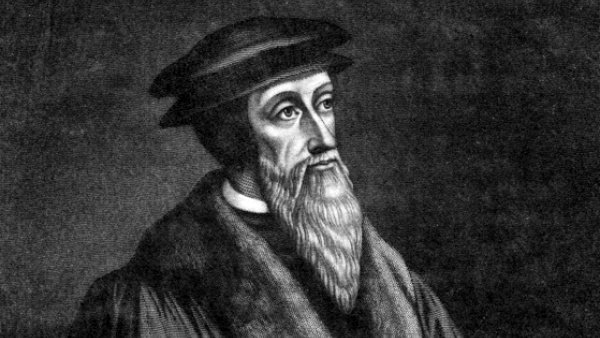

John Calvin was one of the great voices of the Protestant Reformation, but what exactly did he believe, and what else did he contribute to Christianity? Here’s your crash course on the life and accomplishments of John Calvin—and why he still matters today.
Who Was John Calvin?
John Calvin (1509–1564) was born in Noyon, Picardy, France, to a devoted Roman Catholic family. He studied the liberal arts at the University of Paris, but his father wanted him to study law, so he went on to receive a law degree at the University of Orléans. Because John Calvin didn’t want to be a lawyer, he returned to the study of classical literature. In Paris, he left the Roman Catholic Church and became part of the Protestant Reformation movement that was then spreading through Europe. He later moved to Geneva, Switzerland, where he became one of the leaders of the emerging Reformed theological tradition. Though he was a second-generation reformer, John Calvin would become the second greatest voice of the Protestant Reformation after Martin Luther. He is often called the greatest systematic theologian of the Reformation and is the most influential figure in the entire Reformed theological tradition. But he was also a humble and unpretentious man. Upon his own request, he was buried in an unmarked grave. I think pastor Calvin would be troubled that the Reformed theological tradition is popularly referred to as “Calvinism.”
What Did John Calvin Write?
Perhaps Calvin’s two most important works are Institutes of the Christian Religion and his extensive commentaries on the Bible. The first started out as a basic catechism of the Reformed faith but was later developed by Calvin into a full systematic presentation of Reformed theology. It is considered a true theological masterpiece of the Protestant Reformation. The second work is not a single book but rather a group of individual commentaries that Calvin, a gifted biblical exegete, wrote on many books of the Bible.

What Did John Calvin Believe?
Christians of various traditions continue to defend several of John Calvin’s beliefs. The following are perhaps three of John Calvin’s most important theological ideas:
- Sensus Divinitatis (Sense of the Divine): Calvin affirmed that because human beings are made in God’s image, we possess a basic and intuitive awareness of God that is enhanced by our encounter with the created order.
- John Calvin believed, like followers of the Calvinist movement after him, that human beings were created in the image of God. However, their fall into sin has negatively impacted our entire being and thus left our will enslaved by sin, rendering us incapable of choosing God apart from regenerative grace.
- Deeply influenced by the apostle Paul’s writings in Scripture, Calvin proclaimed that out of fallen humanity, God has chosen certain people (the elect) and has extended saving grace to them through the person of Jesus Christ, ensuring that these individuals persevere unto salvation.
Why Does John Calvin Matter Today?
John Calvin is criticized for his strong view of predestination and election, as well as for his connection to the execution of sixteenth-century schismatic Michael Servetus, who was charged with heresy by the Reformed political authorities in Geneva. However, it was Geneva’s political leaders, not Calvin, who had Servetus executed. Still, John Calvin is clearly one of the great Christian theologians of all time and one of the most influential men in the history of Christendom and in Western civilization. While often mistaken as a speculative thinker, Calvin was at heart a deep scholar and insightful interpreter of the Bible.
When evangelical Christians affirm God’s sovereignty and yet also believe humans are somehow morally responsible agents, they are raising that controversial theological issue that John Calvin famously wrote about. Moreover, when evangelicals affirm that human beings seem to be religious by nature, they are touching upon an idea Calvin highlighted.
Other articles in the Christian Thinkers 101 series: St. Augustine; C. S. Lewis; Blaise Pascal; St. Anselm; St. Athanasius; St. Thomas Aquinas; Jonathan Edwards; Søren Kierkegaard; St. Bonaventure; Martin Luther
Reflections: Your Turn
While the theological doctrine of God’s sovereignty can be quite controversial, is there a sense in which it can be practically comforting? If so, how? Visit Reflections on WordPress to comment with your response.
Resources
- A good biography of Calvin is found in John Calvin: Pilgrim and Pastor by W. Robert Godfrey.
- For a study of Calvin and the theological tradition that often bears his name, see The Unaccommodated Calvin: Studies in the Foundation of a Theological Tradition by Richard A. Muller.
- To explore the hotly contested theological debate over the truth or falsity of Calvinism among evangelical Protestants, see the books For Calvinism by Michael Horton and Against Calvinism by Roger Olson.
Subjects: People of Faith
Check out more from Reasons to Believe@Reasons.org