



Genesis 1 and the Early Earth

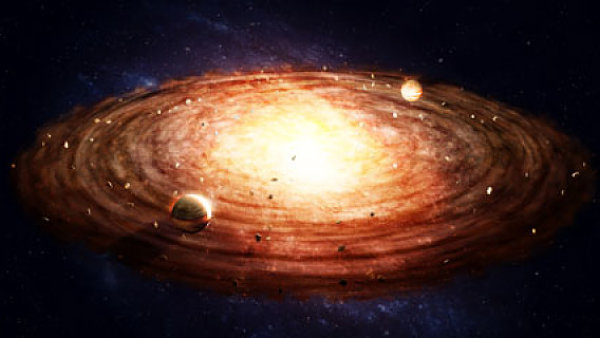

Does the Bible give an accurate account of the things it describes? The answer to that question has enormous ramifications on how we choose to live. If the answer is “no,” then the Bible belongs in the class of literature with interesting and often elegant ideas that might prove useful in life. If “yes,” it provides a compelling and wonderful narrative of who God is and how we relate to him. The very first two verses in the Bible provide a test for this question. While most people are familiar with the biblical description of “in the beginning,” the account of the early Earth in the next verse (Genesis 1:2) is often overlooked. Just like science supports the idea of a beginning to the universe, new scientific research affirms the validity of this “initial conditions” verse.
Biblical Description of the Early Earth
Genesis 1:1 describes the creation of the universe, but Genesis 1:2 immediately changes the frame of reference from out in the cosmos (or beyond) to Earth’s surface. Specifically, the verse states that “the Earth was formless and empty, darkness was over the surface of the deep, and the Spirit of God was hovering over the waters.” This account gives four initial conditions that describe Earth before God’s work during the creation week.
- Formless—with no structure
- Empty—with no life
- Dark
- Dominated by water
Additionally, the phrase “formless and empty” means that Earth’s surface was a desolate, undistinguishable ruin—in other words, utterly unfit for life.
Scientific Description of the Early Earth
Rocky planets like Earth form via a process called core-accretion (see image below). As a giant gas cloud collapses to make a solar system, the star forms at the center while the rest of the material falls into a disk orbiting the star. Within the disk, ice and dust begin clumping together to form larger objects, eventually growing large enough to attract other pieces of ice and dust as well as other clumps. Then the larger clumps continue to grow larger and the smaller clumps either break up or join the larger clumps. The last step of the planet-formation process includes an epoch where the large planetesimals (forming planets) collide with one another and the planets clear out all the dust, ice, and remaining material in their orbits.
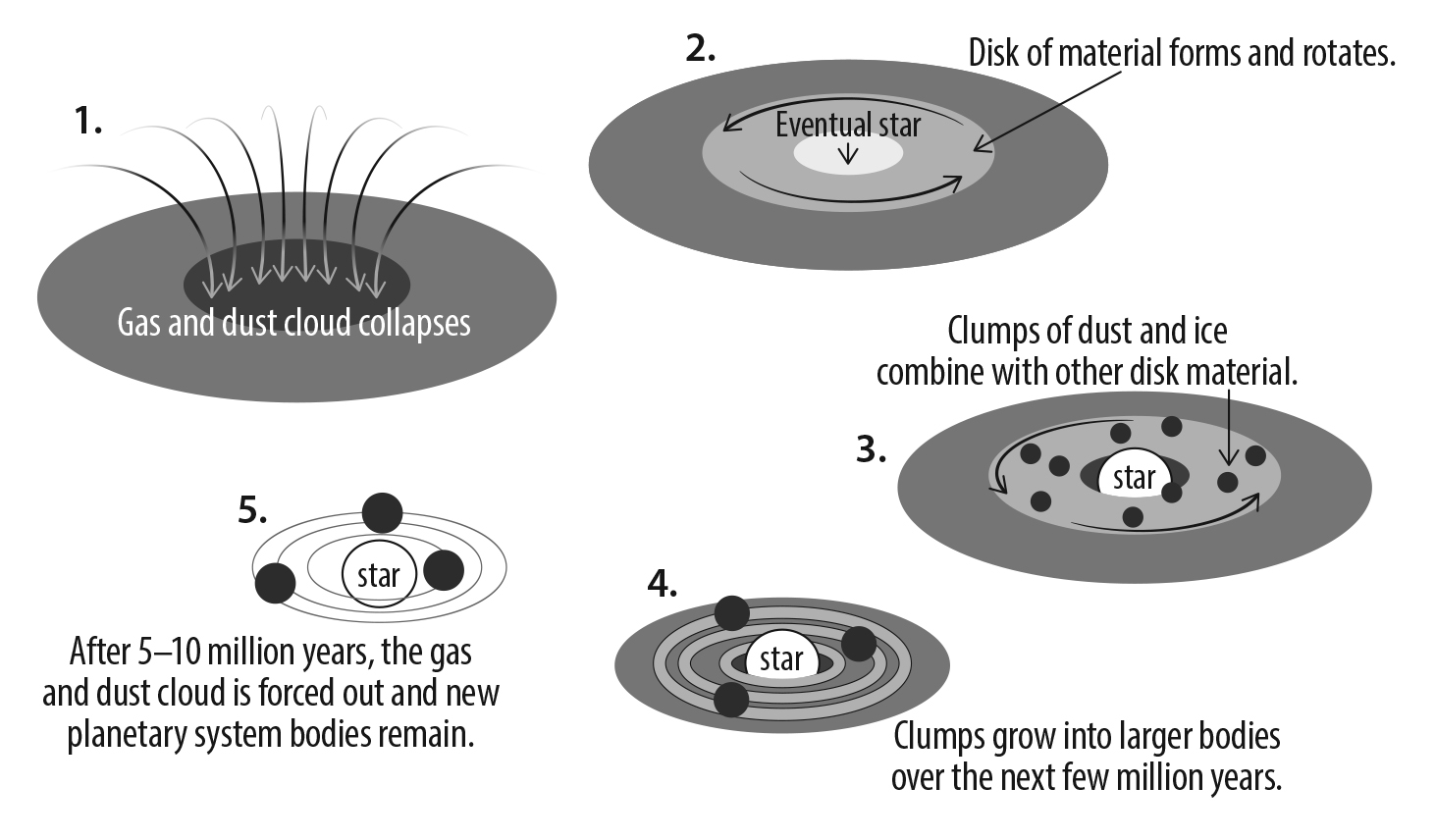
During this last phase, Earth would have experienced numerous collisions with objects ranging in size from a few meters up to tens and even hundreds of miles across. Most scientists think that the Moon resulted from Earth’s collision with a Mars-sized object during the tail end of this phase. These types of large impacts give us good insight on the conditions of the early Earth. Each of these large impactors would have liquefied the surface of the planet, converted all the surface water into steam, and blasted an enormous amount of debris into the atmosphere and into orbit around Earth. As the planet cooled, hot (if not boiling) water would have covered all the “land” under a dark blanket of orbiting and atmospheric debris. This scientific description sounds like a formless and empty, dark, water world.
An Additional Stage of Bombardment
Even after the formation phase, planets continue to experience collisions with comets and asteroids (remnants of the formation process) scattered throughout the solar system. However, the surfaces of Mercury and the Moon provide evidence of a particularly intense period of bombardment known as the late heavy bombardment (LHB). Research indicates that roughly 100 objects capable of making craters 600 miles in diameter hit Earth during this period. (This collision process continues today although at a dramatically reduced rate.) Many collisions during the LHB would have recreated the four conditions of the early Earth.
The accepted dates for the LHB usually span 4.1–3.8 billion years ago. However, a recent study indicates that the LHB might have started as far back as 4.48 billion years ago—almost at the beginning of Earth’s existence. The oldest dates from the Moon rock samples go back to 3.9 billion years, setting a boundary time for the end of the LHB. However, as geologist Stephen Mojzsis notes, “the part of the moon we landed on is very unusual…it is strongly affected by one big impact, the Imbrium Basin, that is about 3.9 billion years old and affects nearly everything we sampled.” Instead, Mojzsis and his team looked at radiometric dates from meteorites collected on Earth and noticed that none of these dated earlier than 4.45 billion years ago. If the LHB is responsible for resetting the radiometric ages of these meteorites, then this date corresponds to the end of the LHB.1
The Bottom Line
The process of planet formation and the effects of the LHB both would have produced conditions on the early Earth that match the biblical description in Genesis 1:2. This result holds regardless of whether the conventional date for the LHB or Mojzsis’s date is correct. The rest of the Genesis 1 account describes how God transformed this barren, hostile-to-life, dark, water world into a place teeming with an abundant, diverse array of life. The correspondence of the scientific and biblical descriptions of the early Earth and how that correspondence continues through the rest of Genesis 1 provides us good reason to trust the Bible and its message. The Bible reveals God’s existence as well as the way he made for us to know him. And that is great news!
Check out more from Reasons to Believe @Reasons.org
Endnotes
- Stephen J. Mojzsis et al., “Onset of Giant Planet Migration before 4480 Million Years Ago,” Astrophysical Journal 881, no. 1 (August 10, 2019): 44, doi:10.3847/1538-4357/ab2c03.